Anti-NGFB, AlpHcAbs® Human antibody

Anti-NGFB, AlpHcAbs® Human antibody
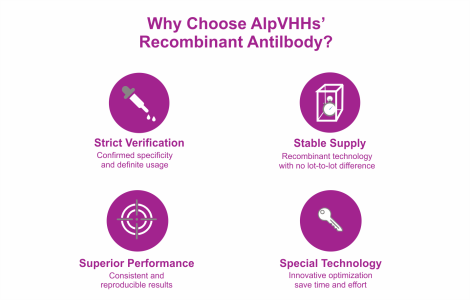

Details and Advantages

Code: 300-714-001

Specification:

Applications: ELISA,Flow Cyt

Reactivity: Human

Conjugate: Unconjugated

Advantages:

High lot-to-lot consistency Increased sensitivity and higher affinity Animal-free production

Product Detail

Product Detail

Description:
Anti-NGFB, AlpHcAbs® Human antibody is designed for detecting human NGFB specifically. Based on ELISA and/or FCM, Anti-NGFB, AlpHcAbs® Human antibody reacts with human NGFB specifically.

Immunogen: Recombinant human NGFB
Host: Alpaca pacous
Isotype: Human IgG1
Conjugate: Unconjugated
Specificity: Human NGFB
Purity: Recombinant Expression and Affinity purified
Concentration: 1mg/ml
Formation: Liquid, 10mM PBS (pH 7.5), 0.05% sucrose, 0.1% trehalose, 0.01% proclin300, 50% Glycerol
Storage: Store at –20 °C, (Avoid freeze / thaw cycles)

Background:
Nerve growth factor (NGF) influences the survival and differentiation of a variety of neuronal and nonneuronal cells. The actions of this polypeptide result from binding to specific cell surface receptors which are present as both high and low affinity sites. Although both types of receptor bind NGF only the high affinity form is capable of signal transduction. Cross-linking studies with 125I-NGF have shown that the high affinity receptor of rat PC12 cells forms an Mr 158,000 complex with NGF while the low affinity receptor forms an Mr 100,000 complex. Full length cDNA clones for both the human and rat NGF receptor genes have been produced and sequenced, revealing greater than 90% homology between the two species. NGF exhibits nerve growth stimulating activity and is involved in the regulation of growth and the differentiation of sympathetic and certain sensory neurons. Further, NGF stimulates division and differentiation of sympathetic and embryonic sensory neurons. Mutations in the NGF gene have been associated with hereditary sensory and autonomic neuropathy, type 5 (HSAN5), and dysregulation of NGF gene expression is associated with allergic rhinitis.

FAQ

Citations

Related Products

Consult

Contact

Telephone:

+86 138 8067 6215

Address:

Building 16, No.99 Haiwang Road, Wenjiang, Chengdu, China 611130