


Code: 300-567-001
Size: 100ug
Applications: ELISA,Flow Cyt
Specificity: Human
Conjugate: Unconjugated
Advantages:
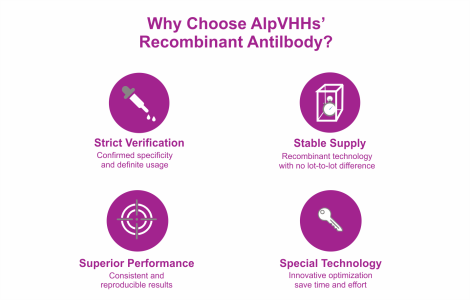
High lot-to-lot consistency
Increased sensitivity and higher affinity
Animal-free production
Product Detail
Description:
Anti-CD61, AlpHcAbs® Human antibody is designed for detecting human CD61 specifically. Based on ELISA and/or FCM, Anti-CD61, AlpHcAbs® Human antibody reacts with human CD61 specifically.
Immunogen: Recombinant human CD61
Host: Alpaca pacous
Isotype: Human IgG1
Conjugate: Unconjugated
Specificity: Human CD61
Purity: Recombinant Expression and Affinity purified
Concentration: 1mg/ml
Formation: Liquid, 10mM PBS (pH 7.5), 0.05% sucrose, 0.1% trehalose, 0.01% proclin300, 50% Glycerol
Storage: Store at –20 °C, (Avoid freeze / thaw cycles)
Background:
CD61 (GPIIIa, ITGB3) is a glycoprotein found on megakaryocytes, platelets and their precursors. CD61 antigen plays a role in platelet aggregation and also as a receptor for fibrinogen, fibronectin, von Willebrand factor and vitronectrin. CD61 is a 105 kDa glycoprotein that associates with either the alpha 11b integrin (CD41) or the alpha V integrin (CD51) at the cell surface. CD61 is expressed on platelets and megakaryocytes in association with CD41, and on endothelial cells, monocytes, platelets and osteoclasts in association with CD51. CD61 is a receptor for fibrinogen, fibronectin, Von Willebrand Factor, vitronectin and thrombospondin. The CD61 protein product is composed of an alpha chain and a beta chain. A given chain may combine with multiple partners resulting in different integrins. CD61 is found along with the alpha IIb chain in platelets. Like other integrins, CD61 is known to participate in cell adhesion as well as cell-surface mediated signaling. Diseases associated with CD61 dysfunction include Glanzmann Thrombasthenia and Platelet type-16 Bleeding Disorder.
Application:
ELISA: 1:4,000-1:10000
Flow Cytometry: 1:200-1:1000
Dilution factors are presented in the form of a range because the optimal dilution is a function of many factors, such as antigen density, permeability, etc. The actual dilution used must be determined empirically.
FAQ
Citations
Related Products
Consult
Contact

Telephone:
+86 17882311198

Address:
Building 16, No.99 Haiwang Road, Wenjiang, Chengdu, China 611130

Email:


