


Code: 300-690-001
Size: 100ug
Applications: ELISA,Flow Cyt
Specificity: Human
Conjugate: Unconjugated
Advantages:
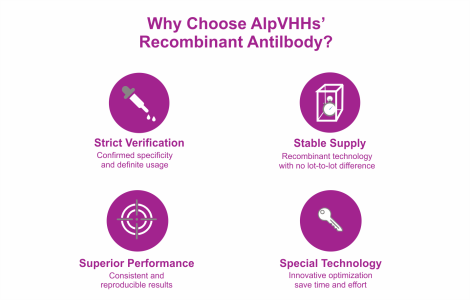
High lot-to-lot consistency
Increased sensitivity and higher affinity
Animal-free production
Product Detail
Description:
Anti-LGR5, AlpHcAbs® Human antibody is designed for detecting human LGR5 specifically. Based on ELISA and/or FCM, Anti-LGR5, AlpHcAbs® Human antibody reacts with human LGR5 specifically.
Immunogen: Recombinant human LGR5
Host: Alpaca pacous
Isotype: Human IgG1
Conjugate: Unconjugated
Specificity: Human LGR5
Purity: Recombinant Expression and Affinity purified
Concentration: 1mg/ml
Formation: Liquid, 10mM PBS (pH 7.5), 0.05% sucrose, 0.1% trehalose, 0.01% proclin300, 50% Glycerol
Storage: Store at –20 °C, (Avoid freeze / thaw cycles)
Background:
G protein-coupled receptor GPR49 has been reported to be expressed in brain, skeletal muscle, placenta, and spinal cord. ESTs have been isolated from normal human brain (amygdala), embryo, and placenta libraries and from human germ cell, uterus, and brain libraries. G-protein Coupled Receptors (GPCRs) comprise one of the largest families of signaling molecules with more than a thousand members currently predicted to exist. All GPCRs share a structural motif consisting of seven membrane-spanning helices, and exist in both active and inactive forms. An array of activating ligands participate in the conformation of GPCRs which leads to signaling via G-proteins and downstream effectors. Ongoing studies have also shown the vast series of reactions which participate in the negative regulation of GPCRs. This "turn-off" activity has tremendous implications for the physiological action of the cell, and continues to drive pharmacological research for new drug candidates. Two blockbuster drugs which have been developed as GPCR-targeted pharmaceuticals are Zyprexa (Eli Lilly) and Claritin (Schering-Plough) which have multi-billion dollar shares of the mental health and allergy markets, respectively.
Application:
ELISA: 1:4,000-1:10000
Flow Cytometry: 1:200-1:1000
Dilution factors are presented in the form of a range because the optimal dilution is a function of many factors, such as antigen density, permeability, etc. The actual dilution used must be determined empirically.
FAQ
Citations
Related Products
Consult
Contact

Telephone:
+86 17882311198

Address:
Building 16, No.99 Haiwang Road, Wenjiang, Chengdu, China 611130

Email:


