


Code: 300-709-001
Size: 100ug
Applications: ELISA,Flow Cyt
Specificity: Human
Conjugate: Unconjugated
Advantages:
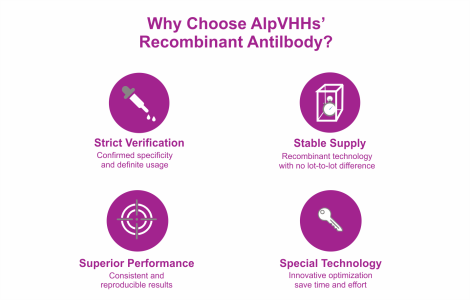
High lot-to-lot consistency
Increased sensitivity and higher affinity
Animal-free production
Product Detail
Description:
Anti-MST1R, AlpHcAbs® Human antibody is designed for detecting human MST1R specifically. Based on ELISA and/or FCM, Anti-MST1R, AlpHcAbs® Human antibody reacts with human MST1R specifically.
Immunogen: Recombinant human MST1R
Host: Alpaca pacous
Isotype: Human IgG1
Conjugate: Unconjugated
Specificity: Human MST1R
Purity: Recombinant Expression and Affinity purified
Concentration: 1mg/ml
Formation: Liquid, 10mM PBS (pH 7.5), 0.05% sucrose, 0.1% trehalose, 0.01% proclin300, 50% Glycerol
Storage: Store at –20 °C, (Avoid freeze / thaw cycles)
Background:
Macrophage-stimulatin 1 receptor (MST1R/Ron), a HGF Receptor/MET-type protein kinase, mediates the biological activities of macrophage-stimulating protein (MSP), a multifunctional cytokine that regulates cell adhesion, motility, growth, and survival. The protein is a membrane-spanning, disulfide-linked heterodimer, which results from cleavage of a glycosylated precursor into 35-kD (alpha) and 150-kD (beta) subunits. Ligand binding results in tyrosine phosphorylation of the beta chain. In knockout studies, MST1R/RON (-/-) mice failed to survive past the periimplantation period. The MST1R/RON gene has been mapped to 3p21, a region of frequent deletion or mutation in small cell lung and renal carcinoma, and has been implicated in the progression of several epithelial cancers. MST1R/Ron expression has been documented in many normal human tissues. ESTs have been isolated from several tissue libraries, including normal colon, mouth, prostate, and testis and cancerous colon, prostate, stomach, and uteru.
Application:
ELISA: 1:4,000-1:10000
Flow Cytometry: 1:200-1:1000
Dilution factors are presented in the form of a range because the optimal dilution is a function of many factors, such as antigen density, permeability, etc. The actual dilution used must be determined empirically.
FAQ
Citations
Related Products
Consult
Contact

Telephone:
+86 17882311198

Address:
Building 16, No.99 Haiwang Road, Wenjiang, Chengdu, China 611130

Email:


