


Code: 300-728-001
Size: 100ug
Applications: ELISA,Flow Cyt
Specificity: Human
Conjugate: Unconjugated
Advantages:
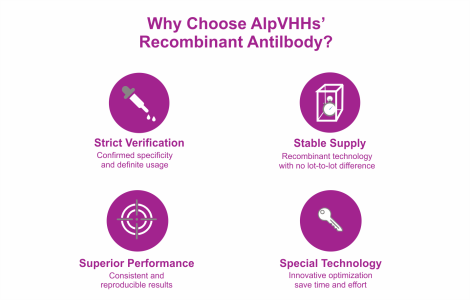
High lot-to-lot consistency
Increased sensitivity and higher affinity
Animal-free production
Product Detail
Description:
Anti-RHD, AlpHcAbs® Human antibody is designed for detecting human RHD specifically. Based on ELISA and/or FCM, Anti-RHD, AlpHcAbs® Human antibody reacts with human RHD specifically.
Immunogen: Recombinant human RHD
Host: Alpaca pacous
Isotype: Human IgG1
Conjugate: Unconjugated
Specificity: Human RHD
Purity: Recombinant Expression and Affinity purified
Concentration: 1mg/ml
Formation: Liquid, 10mM PBS (pH 7.5), 0.05% sucrose, 0.1% trehalose, 0.01% proclin300, 50% Glycerol
Storage: Store at –20 °C, (Avoid freeze / thaw cycles)
Background:
The Rhesus (Rh) blood group system represents one of the most complex and important systems in humans. Two highly homologous genes RHD and RHCE (collectively referred to as RH30 or RHCED) encode the antigens of the Rh blood group system (1-4). These tightly linked genes map to human chromosomal position 1p34.1-1p36. The RHD gene, which is commonly deleted from a large segment of the population, encodes the most potent blood group immunogen, the D antigen (2,5). Rh incompatibility between maternal and fetal blood types results in hemolytic disease of the newborn (HDN), which often results in fetal death (1,2,6). The RHCE gene exists in four allelic forms, and each allele determines the expression of two antigens in Ce, ce, cE, or CE combinations (2,4,5). The RHCED antigens exist as integral membrane proteins with contain 12-transmembrane helices, and maintain erythrocyte membrane integrity. The presentation of the Rh antigenic activity requires the formation of a complex between the RHCED antigens and RHAG (RH50).
Application:
ELISA: 1:4,000-1:10000
Flow Cytometry: 1:200-1:1000
Dilution factors are presented in the form of a range because the optimal dilution is a function of many factors, such as antigen density, permeability, etc. The actual dilution used must be determined empirically.
FAQ
Citations
Related Products
Consult
Contact

Telephone:
+86 17882311198

Address:
Building 16, No.99 Haiwang Road, Wenjiang, Chengdu, China 611130

Email:


