Code: 023-113-009
Size: 100ug / 1mg
Applications: WB,ELISA,ICC/IF,Flow Cyt
Specificity: Human IgG(CH3 Fragment specific)
Conjugate: iFluor647
Advantages:
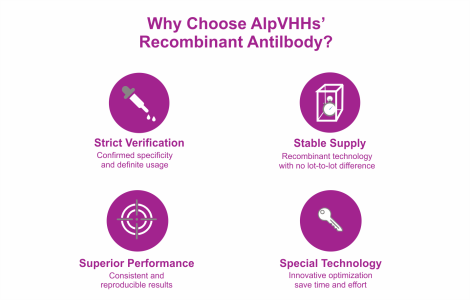
High lot-to-lot consistency
Increased sensitivity and higher affinity
Animal-free production
Product Detail
The Anti-Human IgG (CH3 Fragment Specific), AlpSdAbs® VHH (iFluor647 ×4) is a recombinant, monoclonal single-domain antibody conjugated to iFluor647, engineered for highly specific detection of the CH3 fragment of human IgG Fc. Validated across immunoelectrophoresis and ELISA, this nanobody-based secondary reagent delivers high sensitivity with low background, making it an ideal tool for rapid pre-selection of internalizing antibodies before formal ADC development.
Parameter | Specification |
Immunogen | Human IgG |
Host | Alpaca pacous |
Isotype | VHH domain of alpaca IgG2b/2c |
Conjugate | iFluor647(Ex:651nm, Em:667nm) |
Specificity | Human IgG(CH3 Fragment specific) |
Cross-Reactivity | Recognizes human IgG CH3 fragment specifically, and reacts with cynomolgus IgG. No Cross-reactivity to rabbit , mouse, rat, goat IgG |
Purity | Recombinant Expression and Affinity purified |
Concentration | 1mg/ml |
Formation | Liquid, 10mM PBS (pH 7.5), 0.05% sucrose, 0.1% trehalose, 0.01% proclin300, 50% glycerol |
Storage | Store at –20 °C(Avoid freeze / thaw cycles) , Protect from light. |
High Lot-to-Lot Consistency: Recombinant production ensures reproducible performance across experiments and batches, a critical requirement for regulated research environments.
Increased Sensitivity and Higher Affinity: The VHH single-domain format (<15 kDa) provides superior tissue and cellular permeability compared to conventional antibody fragments, enhancing signal quality in imaging and cytometric applications.
Low Background and High Sensitive: Nano-secondary conjugates demonstrate high specificity and minimal non-specific cytotoxicity, with no significant interference with primary antibody activity when used in combination assays.
Compatible with Multiple Human IgG Subclasses: Detects IgG1, IgG2, IgG3, and IgG4 via CH3 fragment recognition, providing broad utility across antibody research programs.
More Stability: high-affinity nanobodies (nM level) ensure rapid and stable formation of antibody-toxin conjugates.
High-throughput: Suitable for high-sensitivity and high-throughput immunotoxin conjugate killing detection for hybridoma supernatant stage screening.
Validated Applications and Recommended Dilutions
This reagent is validated for use across the following platforms:
Application | Recommended Dilution |
Flow Cyt | 1:200-1:2000 |
ICC/IF | 1:200-1:2000 |
ELISA | 1:5000-1:20000 |
WB | 1:5000-1:20000 |
Super-resolution microscopy | none |
Dilution factors are presented in the form of a range because the optimal dilution is a function of many factors, such as antigen density, permeability, etc. The actual dilution used must be determined empirically.
For laboratories conducting ADC development programs, this reagent supports rapid pre-screening of candidate internalizing antibodies when used as part of a Nano-Secondary ADC workflow. VHH nano-secondary conjugates enable evaluation of internalization-dependent cytotoxicity, comparison of internalization efficiency among multiple antibody candidates, and support of high-throughput screening in tumor cell models — providing a cost-effective alternative prior to formal ADC development.
In mammals, antibodies are classified into five main classes or isotypes – IgA, IgD, IgE, IgG and IgM. They are classed according to the heavy chain they contain – alpha, delta, epsilon, gamma or mu respectively. IgG is the most abundant antibody in normal human serum, accounting for 70-85% of the total immunoglobulin pool. Human IgG consists of four human subclasses (IgG1, IgG2, IgG3 and IgG4), and each contains a different heavy chain. The whole IgG molecule possesses both the Fc region and the Fab region, which possessing the epitope-recognition site. The IgG contains two heavy and light chains(kappa or lambda). The heavy chain is about 50 KD and the light chain is about 25 KD. The common IgG is monomeric with a molecular weight of approximately 150 kD.
VHH are single-domain antibodies derived from the variable regions of heavy chain of Camelidae immunoglobulin. The size of VHH is extremely small(<15KDa) compared to other forms of antibody fragment, which significantly increase the permeability of VHH. Thus VHH is considered of great value for research, diagnostics and therapeutics.
Whether you are characterizing therapeutic antibodies, developing ADC candidates, or optimizing imaging protocols, the AlpSdAbs® VHH (iFluor647 ×4) secondary nanobody delivers the specificity, consistency, and sensitivity your research demands.
→ Download the Full Technical Datasheet
→ Contact Our Scientific Support Team

FAQ
Citations

2026
News
Related Products
Consult
Contact

Telephone:
+86 17882311198

Address:
Building 16, No.99 Haiwang Road, Wenjiang, Chengdu, China 611130

Email: